Through a range of programmes, CAFOD's partners are contributing to gender justice around the world.

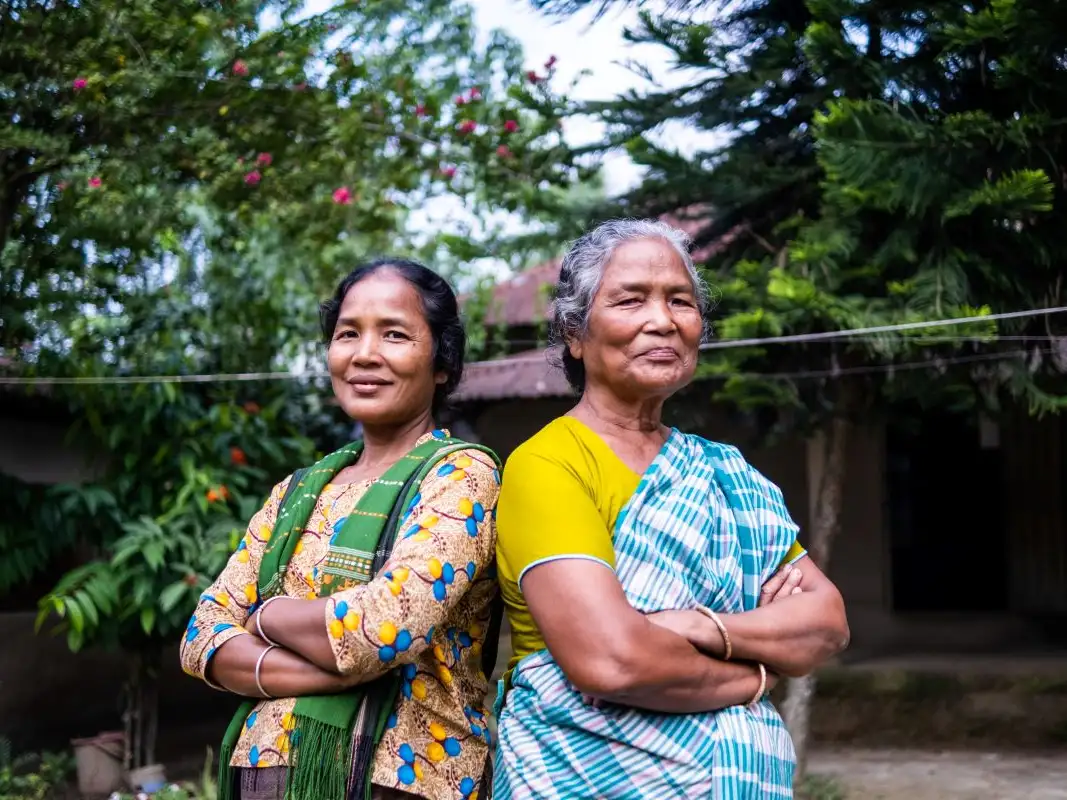
Defending Indigenous women’s rights in the Peruvian Amazon. Credit: CAAAP
Why does CAFOD celebrate International Women’s Day?
At CAFOD, we believe a better world is possible. One where women’s distinctive contributions are valued. Where they live free from violence, fear and discrimination. Where they experience equal opportunities alongside men and boys. International Women’s Day, commemorated each year on 8 March, allows us to reflect on and renew our commitment to tackling inequality and injustice.
What is CAFOD’s approach to working on gender justice?
We recognise that gender justice is everyone’s responsibility. We seek to ensure that every partner and project we support upholds the safety and dignity of everyone, including women and girls.
We have a range of partners around the world working for women and girl’s rights, including those who specialise in supporting the rights of women who face additional discrimination because of disability, ethnicity or race for example. Where possible, we champion local women-led organisations as partners or allies, including those connected to the Church, strengthening their voice, agency and capacity to deliver vital work at a time of significant global funding cuts.
We put relationships at the heart of our gender work – be it those between women, within the household, communities or in governance structures, and we keep men and boys in the picture, knowing that they can be important allies along the way.
Which areas of work does CAFOD target on gender justice?
CAFOD works for gender justice in many ways with our many diverse partners. Here are just some examples of how your support is helping women and girls build a better world, for themselves and their communities.

1. Women’s economic empowerment

An adult literacy class in Kambia District, Northern Province, Sierra Leone with the support of CAFOD partners KADDRO and Caritas Kenema. Credit: KADDRO and Caritas Kenema
Now we are seeing women learning to write their names and teaching their children to read. Women are being leaders, making decisions, standing up and talking without fear.
CAFOD and its partners are supporting rural women and girls in Sierra Leone to become more financially independent through improved access to financial services in the Women and Girls FIRST (Financial Inclusion and Resilience Strengthening) Project.
Women have become more financially stable, with the help of rural savings and loans groups and business management training. Many are now able to put money towards their children’s education. Women are also growing in confidence and self-esteem which has led to an increase in women pursing local leadership roles such as town chiefs. This year, the project is aiming to ensure that these benefits reach women with disabilities who have previously experienced barriers to their participation such as accessibility.
“Now we are seeing women learning to write their names and teaching their children to read. Women are being leaders, making decisions, standing up and talking without fear,” says Fatmata from our partner KADDRO.
2. Women’s leadership, agency and voice

Defending indigenous rights in the Peruvian Amazon with the support of CAFOD partner CAAAP. Credit: CAAAP
Women, girls and Indigenous groups experience high levels of gender-based violence, as well as limited educational and economic opportunities, and are frequently excluded from decisions that affect their lives. This is made harder by a shrinking space for Indigenous and women’s rights, both locally and nationally. Our partner CAAAP is working alongside Indigenous communities to strengthen women’s leadership and ensure their voices are heard.
Women are also learning more about individual and collective rights, including their right to participate in decision making, use their own Indigenous language and access justice in their own language. Over the past year CAAAP has supported Indigenous women across the Amazon and in urban Lima through training on violence prevention, leadership and Indigenous rights, alongside storytelling and community media production that amplify women’s voices.
Together, women leaders have developed a shared action plan to strengthen their political voice and advance gender equity, and some have gone on to represent their communities in national and international advocacy spaces (like the Pan-Amazon Water Summit or CoP20), calling for the protection of their territories and the care of our common home.
“We as Awajún peoples want to reclaim our culture and our lives, we want to live as we did before without pollution. We want to learn more about our traditions, and we want to be leaders,” explains Trifina from the Shapijim community.
3. Gender-based violence prevention and response

CAFOD partner Women Now for Development is creating safe spaces for women and girls in Lebanon. Credit: Women Now for Development
I am happy with myself, and my children are proud of me. I am now more confident and more connected.
In the Middle East, we’ve been working with local partners Women Now for Development and Association Najdeh to protect, support and empower Lebanese, Syrian and Palestinian women affected by conflict or crises, many of whom are survivors of gender-based violence. We continue to support our partners to run centres offering vital protection services including legal consultations, counselling and art therapy both for individuals and groups. Women and youth committees are strengthened to offer social support to their communities, and women are provided with skills and financial training to enable access to sustainable job opportunities. Women and adolescent girls participating in the projects report increased feelings of safety and confidence to pursue new opportunities.
"I am happy with myself, and my children are proud of me. I am now more confident and more connected," says Akilah, who was forced to flee her home due to war and has been participating in CAFOD-funded English language classes in Lebanon.
4. Gender and social norms change

Shorai and Hamunyari with their children – advocates for positive shifts in gender norms with support from Caritas Chinhoyi. Credit: Reason Mupanga, Caritas Chinhoyi
Empowering women strengthens the whole family
Negative and harmful social and cultural norms and practices are a barrier to gender justice. Our partner Caritas Chinhoyi is seeing important shifts in family dynamics in Rushinga, Zimbabwe, using the Gender Action Learning System. This approach helps communities to identify areas where they want to see change and then engage gender champions (both men and women) to spearhead the shift.
In Mutuengwa Village, husband and wife Shorai and Hamunyari now have a more balanced distribution of responsibilities. The sharing of farming, planning and decision making is stimulating household unity, food and income security. Their vision? Educating their children and building a resilient future together. This unity is inspiring other couples in the community to engage. “Empowering women strengthens the whole family,” Shorai says.
Learn more and support CAFOD's work on gender justice
Explore a handpicked collection of ethically sourced charity gifts that honour the strength, resilience and creativity of women.